Since 2009, we've been designing websites for more pubs and restaurants than any other digital agency, and we've distilled the must-haves for hospitality websites that convert.
Why listen to us? We picked up Best UX Designer and Influencer Marketing Campaign of the Year at the National Digital Awards 2026 – recognition that sits alongside our previous award wins and annual Pints & Profits pub industry and consumer behaviour report.


The short answer is Restaurant website design requires mobile-first layouts, seamless reservation systems, fast loading speeds, and integrated digital menus to drive bookings and boost customer engagement. These are not nice-to-haves – they’re essential.
But let’s dig a little deeper into website design for restaurants.
Article summary:
- What makes restaurant website design different?
- Multi-site restaurants: Challenges & Solutions
- Introducing pub.web: The recommended platform for restaurant web design
- Why a restaurant website still matters
- Why choose Brew for your restaurant website?
- Your step-by-step restaurant website plan
- Restaurant website design stats worth knowing from the Brew Pints & Profits Report
What makes restaurant website design different?
Restaurant websites aren’t like e-commerce stores or corporate sites. They have hospitality-specific challenges that need purpose-built solutions. Based on designing websites for hundreds of UK hospitality brands, we know what it takes.
Website design for restaurants: Hospitality-specific requirements
- Emotional engagement: Visitors should instantly connect with your venue’s vibe – from beer gardens to chef specials.
- Time-sensitive UX: Users typically visit with urgency – to book, check menus, or find your address.
Website design for restaurants: Customer journey considerations
Most restaurant site visits follow this pattern:
- Inspiration – "Is this the vibe I’m after tonight?"
- Confirmation – "What’s on the menu? Can I book?"
- Action – "Where is it? Can I reserve a table now?"
Design must support this journey seamlessly. If yours doesn’t, you’re losing customers.
Website design for restaurants: Booking and ordering functionality needs
“Customers increasingly prefer to book tables or rooms online rather than over the phone, so make sure they’re booking through you.” (Source: Pints & Profits Pub & Bar Report 2026)
Integration must-haves:
- Table booking engines (e.g. OpenTable)
- POS & CRM systems
- Delivery platforms like UberEats and Deliveroo
- Loyalty or reward systems
- Google Analytics and event tracking for return on investment (ROI)
Multi-site restaurants: Challenges & Solutions
How do restaurant chains maintain brand consistency online?
Solution: Use a centralised design system with local customisation options.
Our approach: The pub.web platform supports a template-driven model, where core branding is protected, but content (menus, events, images) is customisable by each venue.
With pub.web, chains maintain brand standards without sacrificing local flair.
How do you manage multiple restaurant websites efficiently?
Solution: Unified dashboards and content management.
Our edge: brew.web enables single-login management for dozens of locations, complete with analytics and menu management.
10 essential elements for restaurant website design:
To drive bookings and boost engagement, your restaurant’s website must include key features that serve both customer needs and business goals. These ten essentials form the foundation of a high-performing hospitality website.


- Mobile-responsive design: With over 90% of restaurant website traffic coming from mobile devices (Pints & Profits 2026), responsive design isn’t optional – it’s mission-critical.
- Accessible design and content: 1 in 5 people in the UK have a long-term illness or disability (Gov.uk). Accessibility means creating clear content that everyone can use, including those with specific needs, like screen readers for the visually impaired or special tools for those with motor difficulties.
- Integrated online reservation system: Offering real-time bookings directly on your site reduces drop-off and encourages direct reservations over third-party apps.
- Digital menu with pricing and allergens: A clear, interactive menu builds trust and helps diners make quick decisions – especially those with dietary requirements.
- Optimised speed (below 3-second load time): Slow sites cost you customers; pages should load in under three seconds to prevent bounce and maximise conversions.
- Photo gallery showing food, space, and vibe: High-quality visuals create an emotional connection and help customers visualise the dining experience. 41% of consumers engage with food photography (Pints & Profits 2026).
- Clear contact and location info with maps: Include embedded Google Maps and clickable phone/email links to eliminate friction in finding or contacting you.
- Customer reviews and ratings: Displaying trusted reviews increases credibility and positively influences first-time visitor decisions.
- Event and promo integration: Feature upcoming events, offers, or seasonal specials directly on your homepage or in banners to drive footfall. 58% of consumers engage with special offers and promotions – the highest-performing content type (Pints & Profits 2026).
- Booking and loyalty integrations (e.g., POS, delivery apps): Streamlined integration with your tech stack ensures real-time accuracy and supports seamless customer journeys.
More restaurant web design features for a competitive advantage:
Beyond the basics, these advanced features can set your restaurant apart – enhancing user experience, operational efficiency, and long-term guest loyalty.
- Social media links and sharing: Make it easy for guests to follow you, share your content, and engage with promotions via social platforms.
- Online ordering system integration: Let guests order ahead for delivery or collection directly from your venue – keeping commission in your pocket.
- Table availability checker: Real-time availability helps reduce frustration and gives users confidence when booking peak times.
- Wait list management: Offer digital waitlists so customers can reserve a spot during busy periods without needing to call ahead.
- Event booking functionality: From private dining to ticketed events, online RSVPs simplify planning and reduce staff admin.
- Loyalty program integration: Encourage repeat visits by linking your website to your rewards program or mobile app.
- Multi-language support (for diverse markets): Attract tourists and non-native speakers by offering key pages in multiple languages.
Introducing pub.web: The recommended platform for restaurant web design
What it is: A purpose-built restaurant website platform for hospitality businesses.
Who it’s for: Independent restaurants and multi-site operators alike.
How it works: Drag-and-drop builder with proven, high-performing templates for pubs, bars, and restaurants.
Why it’s different: No upfront costs. Built by hospitality marketers. Expert support included.
pub.web restaurant website design platform: Features
- Pricing: Monthly subscription at £50 per month, no setup fees
- Setup Time: Go live within days once we have everything we need
- Support: Access to hospitality marketing experts
- Integrations: Compatible with 50+ hospitality tech platforms
- Customisation: Full visual control with modular flexibility
- Performance: Sub-3-second load speeds
- Maintenance: Security updates and tech support included
What’s next in website design for restaurants? Brew’s Hospitality+
We’re teasing something big: Hospitality+, our next-gen hospitality marketing toolkit. Designed for growing groups and national chains.
Sign up or contact us to learn more...
Why a restaurant website still matters
62% of consumers research online before visiting a venue (Pints & Profits 2026), making your website a critical part of the decision-making journey.
Additionally, 14% of all UK adults now use AI tools such as ChatGPT, Gemini, and Perplexity to find pubs and restaurants, rising to a third of 25–34s (Pints & Profits 2026).
This highlights the growing importance of AI discoverability and structured website content.
Why choose Brew for your restaurant website?
We’ve helped hundreds of hospitality businesses launch, scale, and optimise their digital presence since 2009... including some of the UK’s most respected names.
Mitchells & Butlers (M&B)
Challenge: A full rebrand for the corporate website of Mitchells & Butlers, needing a refresh after 12 years.
Solution: We upgraded the old website to a brand-new CMS and static frontend to create a fast, secure and modern website.
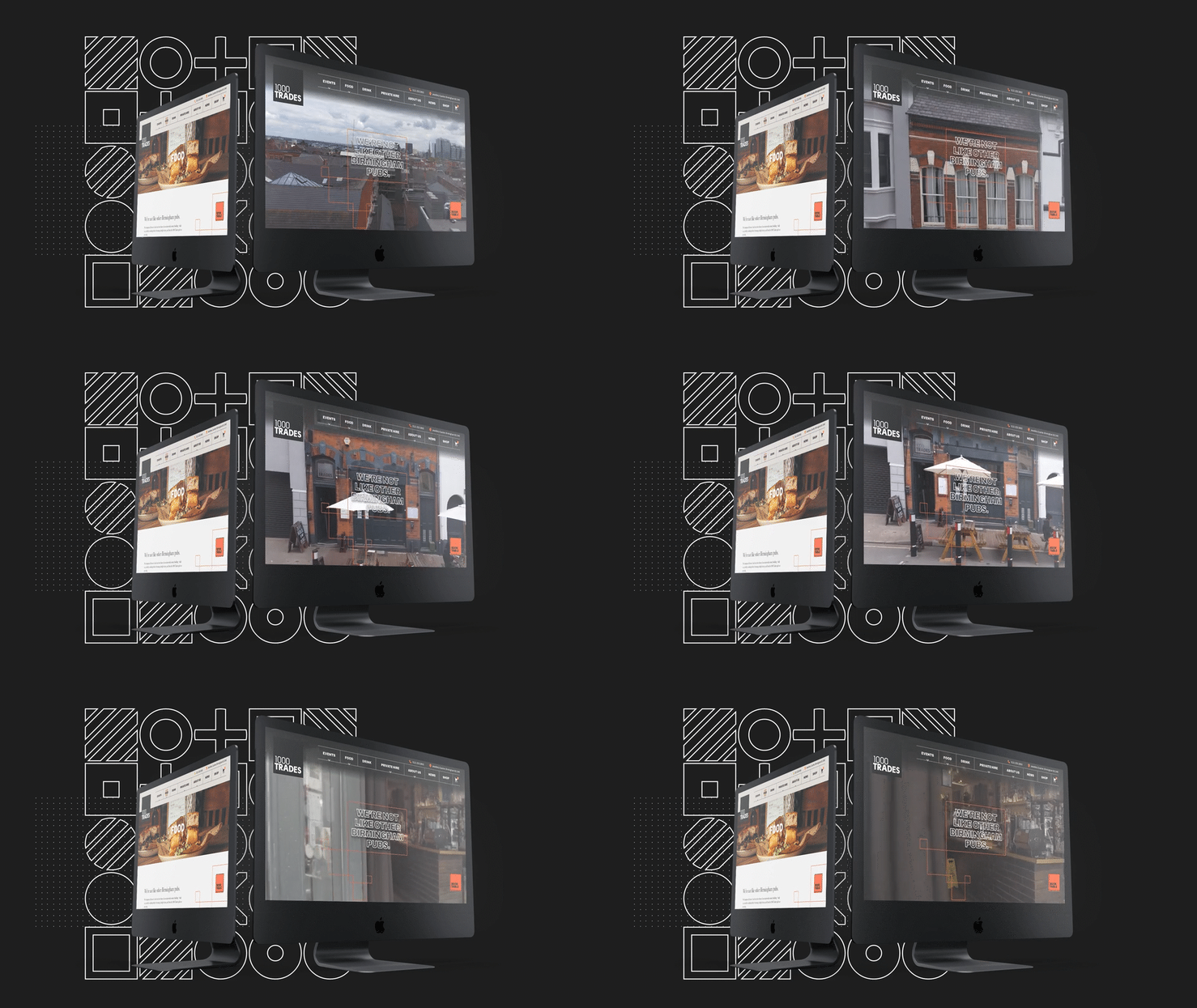
Find out more1000 Trades (independent pub)
Challenge: Outdated, non-mobile website and manual booking process.
Solution: Mobile-first rebuild with real-time reservation and event booking.
Results: 25,000 web visits within the first year, increasing online bookings with a 20% conversion rate.
Find out moreBatemans Brewery
Challenge: A full rebranding, including a new website design for their managed pubs, their corporate website, and some of their associated businesses.
Solution: Brew designed and launched campaign microsites and core pub websites, helping drive digital orders and streamline guest communication.
Results: We increased website visits by 25%, increased new website users by 30%, and increased all traffic driven by key marketing channels by 100%.
Find out moreYour step-by-step restaurant website plan
Designing a high-performing restaurant website requires a structured, strategic approach. Our proven three-phase process ensures your site not only looks great, but delivers measurable results.
Phase 1: Discovery
Laying the groundwork for a site that reflects your brand and meets customer expectations.
- Assess restaurant brand goals: Start by identifying your business objectives – whether it's increasing bookings, boosting online orders, or promoting events.
- Review competitor positioning: Analyse local and national competitors to understand what’s working in your niche and where your site can stand out.
- Identify tech and booking requirements: From POS systems to booking platforms and delivery integrations, define the necessary technical infrastructure upfront.
- Plan content strategy and customer journeys: Map out how customers flow through your site – from discovery to conversion – to ensure your content supports each step.
Phase 2: Design & Build
Bringing your restaurant’s story to life with engaging design and seamless functionality.
- Custom site designs with brand flair: Ensure every layout and visual element is tailored to reflect your restaurant’s unique character and customer vibe.
- Menu, gallery, and content creation: Develop keyword-rich, GEO and SEO-optimised content with mouthwatering menus, professional images, and event showcases.
- Tech integrations (POS, booking, etc.): All critical systems – bookings, reviews, loyalty programs – should be integrated into the site’s backend.
- Speed testing and mobile QA: Your site should be optimised for under 3-second loading times and tested across mobile devices to ensure flawless UX.
Phase 3: Launch & Optimise
Get your website out there! Push it live and then keep it performing at its best.
- Launch with soft testing: Release the site in a controlled environment to ensure stability and usability before the public launch.
- Analytics tracking (GA4, events): Install advanced analytics tools so you can monitor conversions, booking trends, and user behaviour from day one.
- Regular updates and seasonal optimisations: Support ongoing tweaks – whether it’s updating menus, adding Christmas events, or launching new campaigns.
- Training your staff to update the site: Make sure your team gets hands-on training so they can easily update key content, manage bookings, and post announcements.
Find out more: European Accessibility Act: Is your website ready?
Getting started with Brew
We’re here to help you go from digital chaos to hospitality excellence.
Next steps:
- Contact us for a free website consultation
- Browse our hospitality-specific case studies
- Read through our pub marketing blogs
- Book a discovery session with our strategists
Let’s make your restaurant’s website work as hard as your kitchen does.
Restaurant website design stats worth knowing from the Brew Pints & Profit Report
“90% of online traffic comes from mobiles.”
“Mobile-friendly booking systems and interactive content are essential for engaging today’s tech-savvy pubgoers; customers increasingly prefer to book tables or rooms online rather than over the phone, so make sure they’re booking through you.”
“Search engines play a role in discovering new pubs and restaurants; significant traffic comes from Google search (56.0%), followed by booking platforms including Booking.com and TripAdvisor (21.5%).”
“Loyalty programmes can be an effective way to encourage repeat visits and higher spending per visit. By rewarding customers for their loyalty, pubs can create a sense of community and build long-term relationships with their customers.”
“Most customers know what they want to eat before arriving at the pub... To cater to this trend, pubs should ensure their menus are easily accessible and visually appealing on their website and social media channels.”
“Industry professionals note a strong correlation between review scores and sales, with higher scores driving more business. To manage their online reputation effectively, pubs should use platforms such as Google Business Profile and TripAdvisor to monitor and respond to reviews across multiple sites.”
For more stats about the challenges, trends, and actions for pubs, read the highlights of Pints & Profits, our latest Pub and Bar Report.


Adam Cox
Adam is Brew’s technical director, and he keeps our agency at the forefront of tech in hospitality marketing, from client-pleasing platforms to efficiency-driving automation.